
Most people who call us about mold testing have the same question: what exactly happens, and what do I walk away with? A professional mold inspection answers whether mold is present, where the moisture feeding it is coming from, and how much is circulating in the air you breathe. GreenRoom Remediation performs certified, independent mold testing across Brooklyn, Manhattan, Queens, the Bronx, Staten Island, and the wider New York City area, following IICRC standards and NYC Department of Health guidance so your results reflect the real conditions inside your property.
Starting At $499
In compliance with New York State Mold Law, our certified assessors document the type and concentration of mold, identify the moisture source, and deliver a written report you can hand to an adjuster or attorney. You get an unbiased, lab-backed picture of the problem before any removal work is ever scoped.
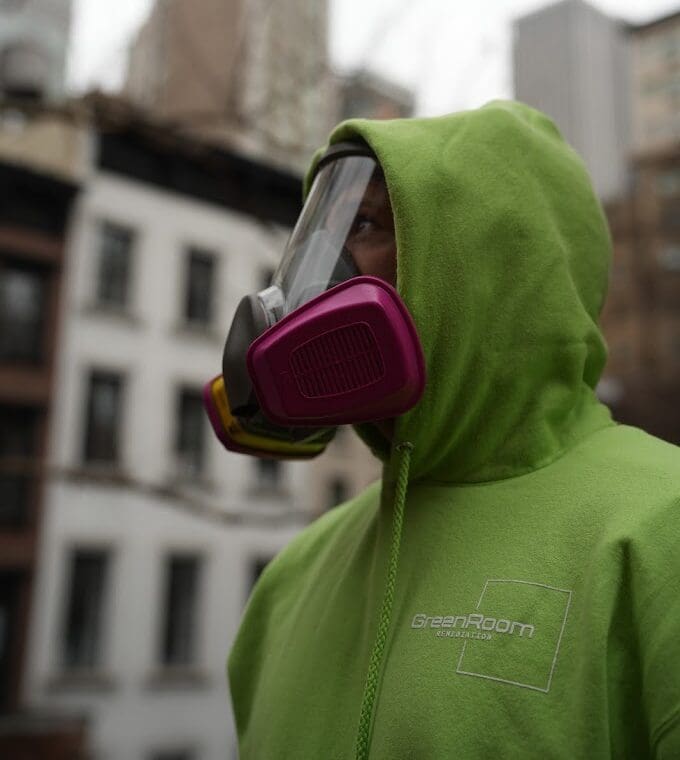
Say goodbye to mold concerns and hello to a clean, professionally inspected environment, backed by licensed mold assessors and lab-tested results.
Why Choose Us For Mold Testing
Our NYC mold testing service gives you a complete, certified read on your property’s condition. Backed by years of field experience and a working knowledge of New York State Mold Law and NYC Department of Health guidance, our certified assessors combine eco-friendly, low-disruption inspection methods with the latest detection technology to deliver accurate, defensible results, whether you are a homeowner, landlord, or business owner.
Every job begins with a detailed mold inspection, using moisture meters, air sampling, and surface testing to evaluate contamination levels. From there, we document our findings in a written report that defines the type and concentration of mold, identifies the moisture source, and outlines the recommended scope of work. That report gives you and any licensed remediation contractor an independent, lab-backed basis for the work that follows.
Transparency drives the whole process. We keep you informed at every stage, explain what each reading and sample means, provide the lab results in writing, and share prevention guidance so you understand how to keep conditions dry and mold-resistant going forward.
What Your Mold Testing Includes
Our standard mold testing package is $499 and is built around two samples, the minimum needed to draw a defensible conclusion about your indoor air. The first is a mandatory outdoor control sample, and the second is an indoor air sample taken in the area of concern. Comparing the two is what tells a certified mold assessor whether the spore levels inside your space are genuinely elevated or simply tracking the outdoor baseline. Without that outdoor control, an indoor number means very little, which is why we never skip it.
Every $499 package includes a full report with documentation: lab-verified spore types and concentrations, the readings we captured on site, photos, and clear recommendations for next steps. That report is what holds up when an insurance company, a landlord, or a court asks for proof. If you need to map more than one room or confirm a suspected hidden source, additional air, tape lift, and surface swab samples are $99 each.
Testing vs. Remediation: Why the Inspection Comes First
People often use mold testing and mold remediation to mean the same thing, but they answer different questions. Testing is the diagnostic step. It establishes whether mold is present, what kind it is, how concentrated it is, and what conditions are allowing it to grow. Remediation is the removal work that follows once those facts are known. Starting with an independent assessment protects you twice over: you get an objective picture of the problem before anyone proposes a scope of work, and you have documented, lab-backed evidence on file. For hidden mold, recurring odors, or any situation tied to insurance or a landlord, that documentation is the difference between a claim that is approved and one that is questioned.
Straightforward Mold Testing Pricing
No vague estimates. Here is what each service costs and exactly what you receive.
The Instruments We Use During a Mold Assessment
A reliable mold inspection is only as good as the tools and the technician behind them. Here is the equipment our assessors bring to every job, what each instrument does, and why it matters.
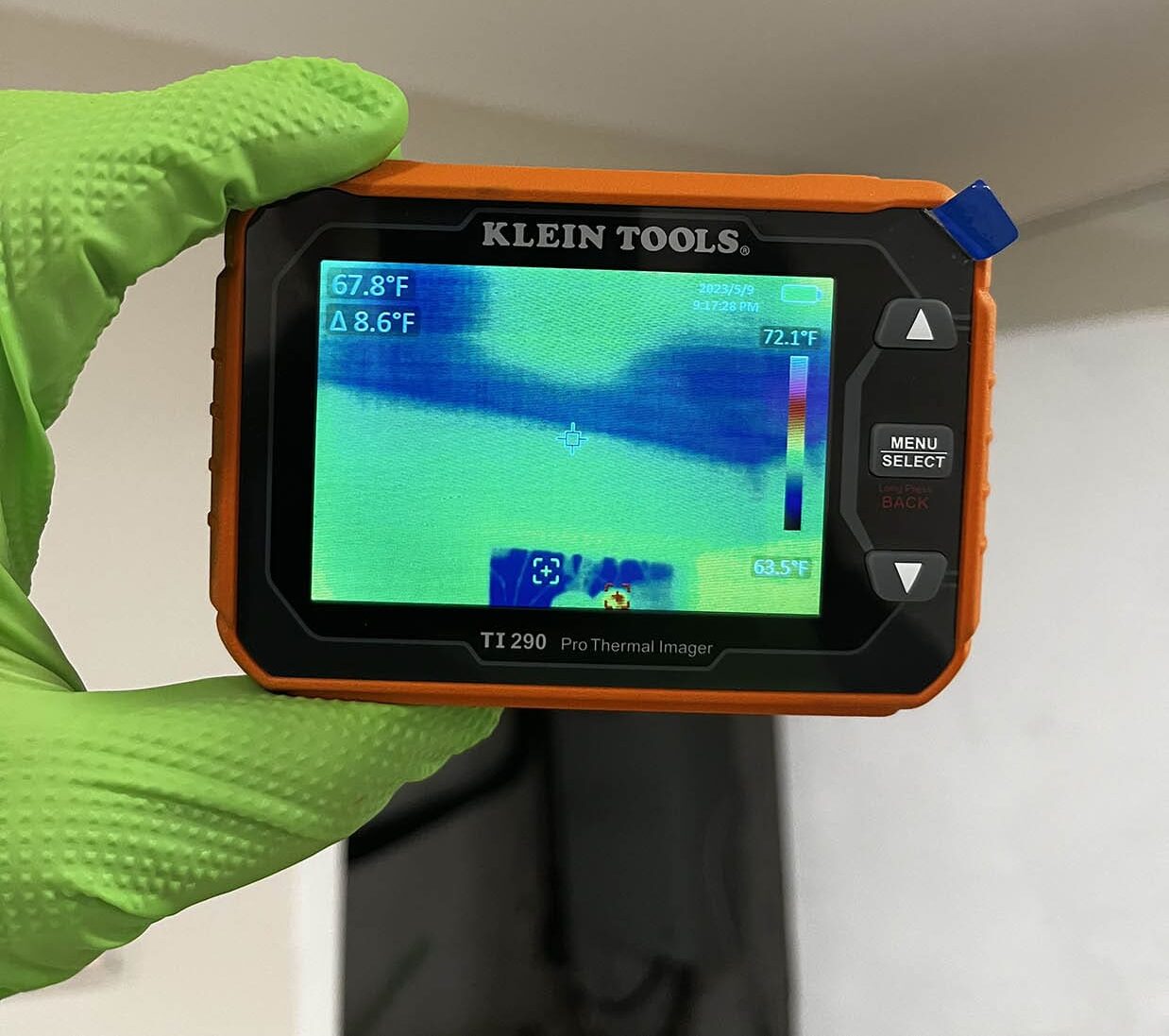
Infrared Thermometer Detection
An infrared thermometer lets our assessors read surface temperatures across walls, ceilings, and floors without ever touching them. Cooler zones frequently point to trapped moisture from a slow leak or condensation, the precise conditions mold needs to take hold. The reading does not confirm mold or measure water content on its own, so we treat every cold spot as a flag that gets verified with a moisture meter and a direct visual check. In older Brooklyn and Manhattan buildings, this is often how we find a problem hiding behind a finished wall.
Digital Psychrometer
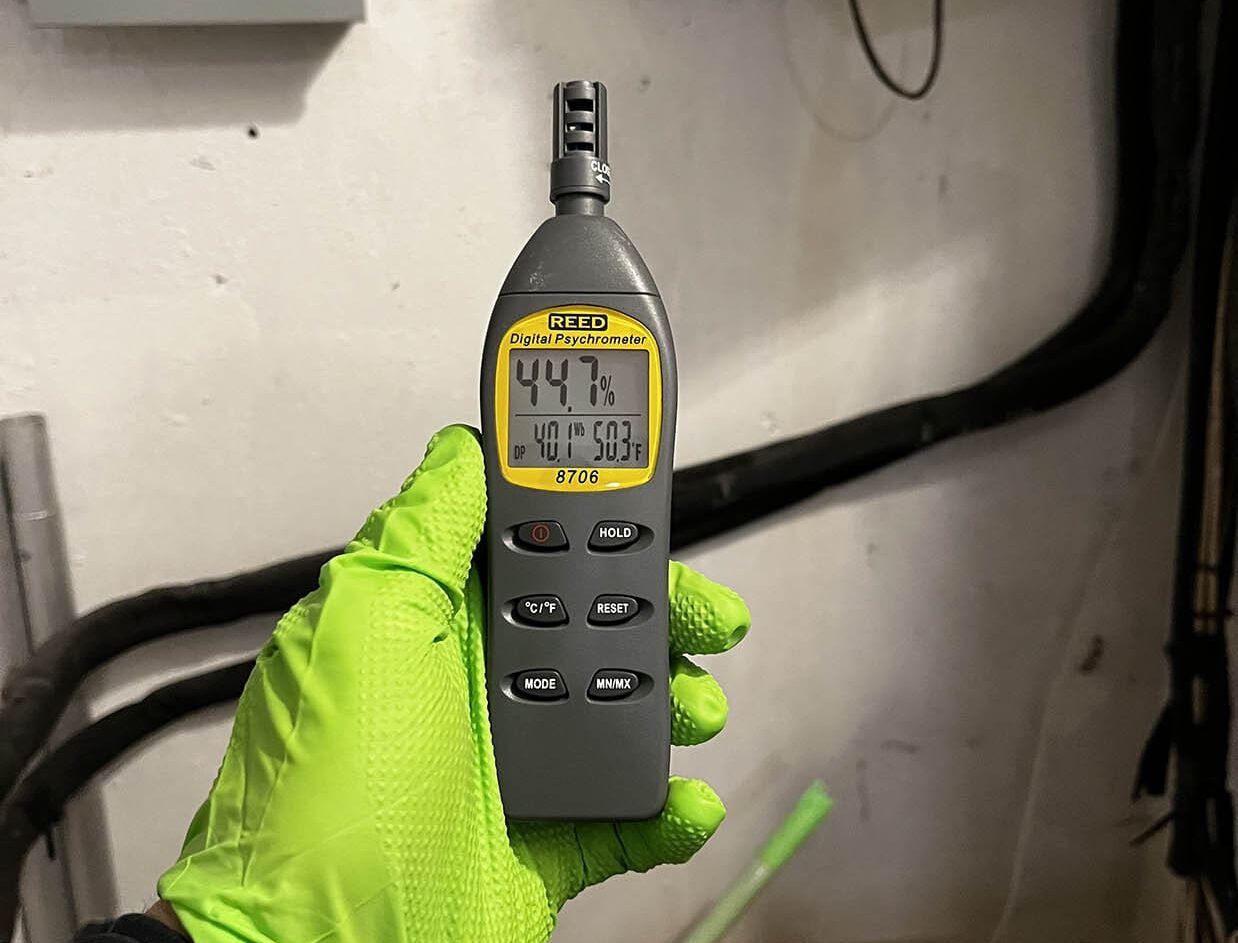
A digital psychrometer records the ambient conditions inside the area of concern: temperature, relative humidity, and dew point. Those three numbers tell us whether the environment is actively encouraging mold, because elevated humidity and surfaces sitting near the dew point are exactly where condensation and growth begin. Capturing these readings during the inspection also gives you a documented baseline, so if remediation follows, there is hard data to confirm conditions have actually stabilized rather than a verbal assurance.
Indoor Air Quality Monitor
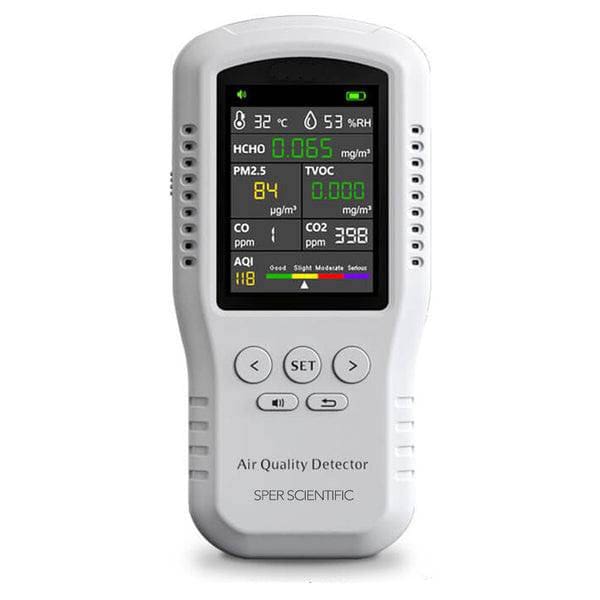
Our indoor air quality monitor continuously logs the environmental factors that drive both comfort and mold risk. It tracks temperature and relative humidity, particulate matter such as PM2.5, PM10, and overall AQI, and VOC or TVOC levels, and on many jobs it also reads carbon dioxide and carbon monoxide as an indicator of ventilation quality. Spikes in airborne particles or VOCs help us pinpoint problem zones and gauge potential health impact before visible signs ever appear. The monitor cannot identify mold spores by itself, which is why we always pair this real-time data with laboratory air sampling so the assessment is built on evidence rather than assumption.
Moisture Meter
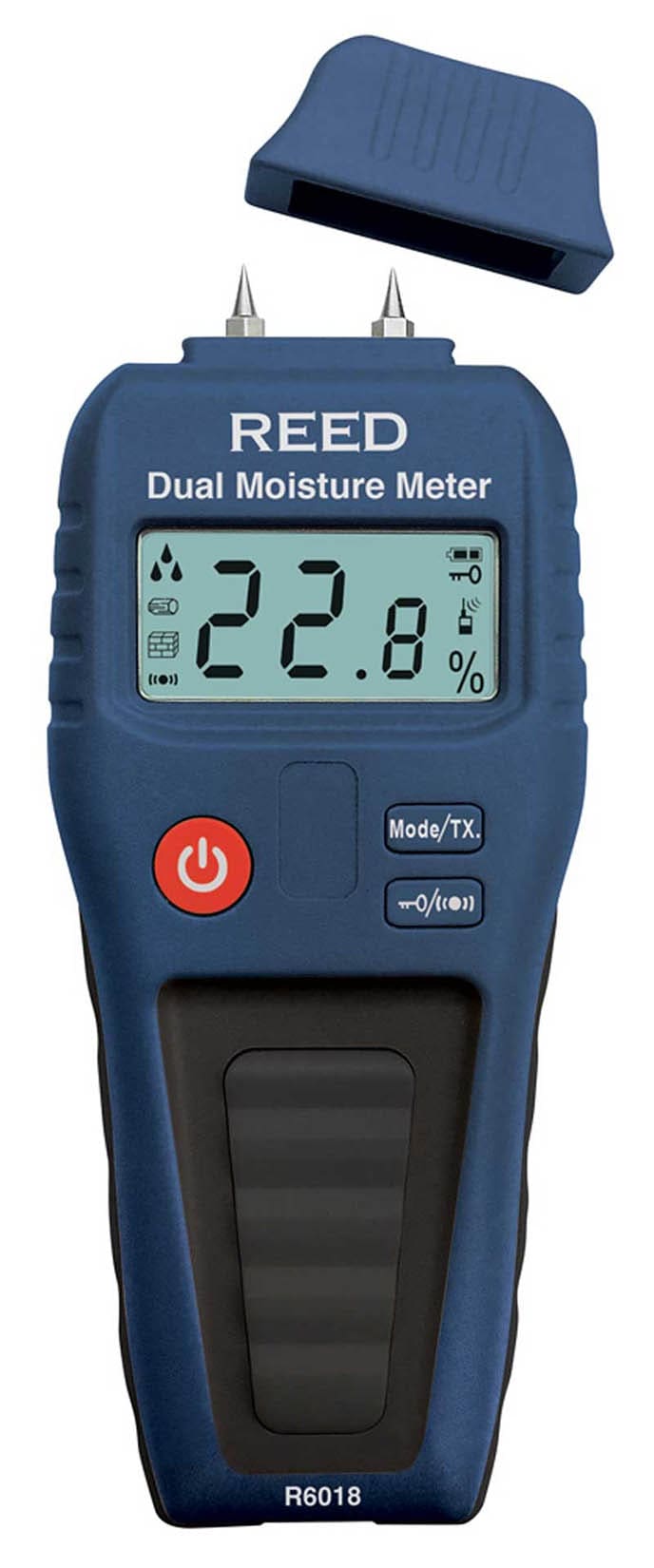
The moisture meter gives us a direct numeric reading of how much water sits inside building materials such as drywall, wood, plaster, concrete, and flooring. Because mold cannot grow without excess moisture, mapping these readings is one of the most dependable ways to locate active problem areas, including damp pockets that are completely invisible from the surface. We work with both pin and pinless modes, scanning broadly to find suspect areas and then confirming specific spots without causing unnecessary damage to your finishes. This is the instrument that most often turns a vague suspicion into a precise location.
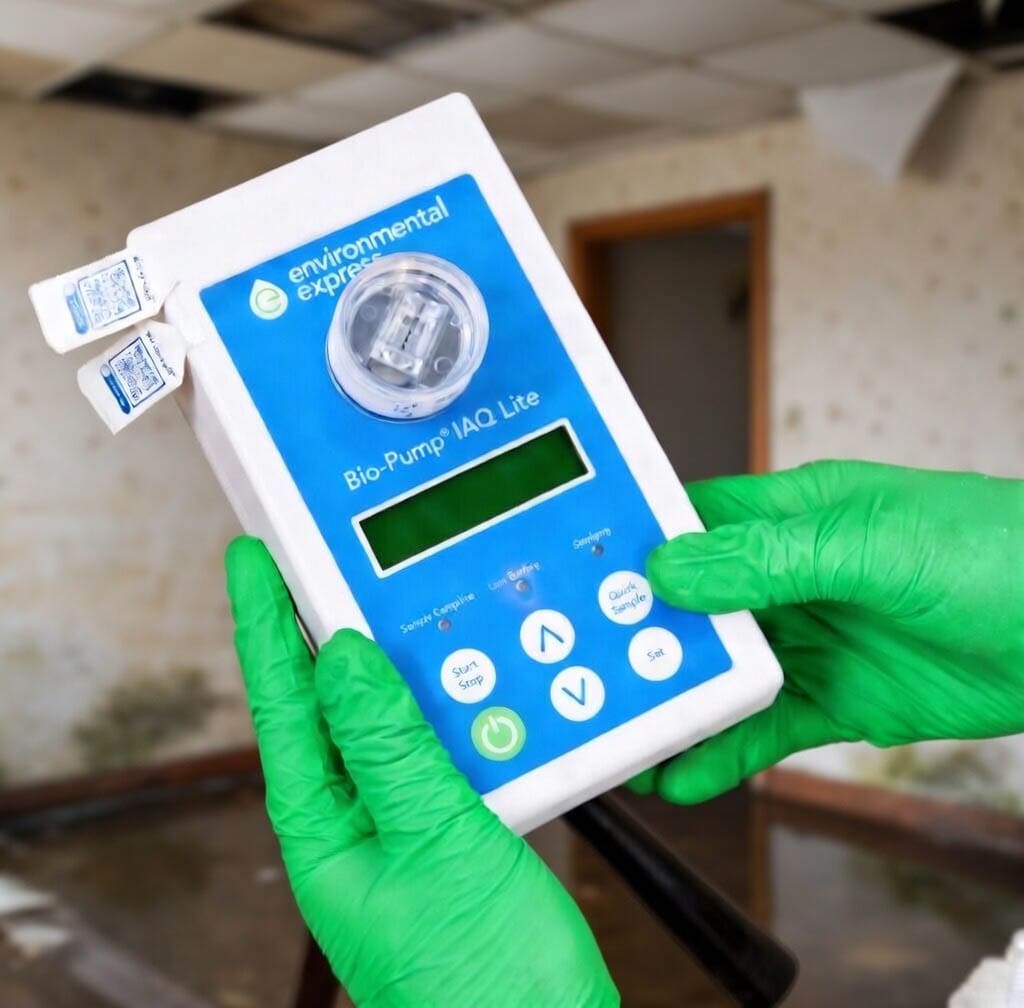
Air-O-Cell Air Sampling
Air sampling is where suspicion becomes data. Our portable, battery-powered pump draws air through Air-O-Cell spore trap cassettes, capturing the airborne particles for analysis by an accredited laboratory. The lab identifies the mold species present and their concentrations, and we measure your indoor sample against the mandatory outdoor control to judge whether levels inside are truly elevated. Those results are what drive the written report and any remediation scope that follows, and they are documented to a standard that holds up for insurance review and legal proceedings.
From the first inspection to your written report
Our Mold Testing Process, Step by Step
We start with a thorough walk-through of the area of concern, looking for the visible signs of a moisture problem: staining, warping, peeling finishes, and musty odor. For clients who only need this first step, a standalone property walk-through is available, with documented conditions and a written findings report. If you move forward with full testing, that fee is credited toward your testing package.
Using infrared thermometer scanning and pin and pinless moisture meters, we map temperature and moisture across the suspect areas. This locates damp materials and hidden water behind walls, under flooring, and around plumbing, where mold most often grows out of sight in older NYC buildings.
We collect the mandatory outdoor control sample and at least one indoor air sample in the area of concern using Air-O-Cell spore trap cassettes. Where a specific surface is suspect, we add tape lift or swab samples so the lab can confirm what is growing and where.
Samples go to an accredited laboratory that identifies the mold species and measures spore concentrations. Comparing your indoor results against the outdoor baseline is what determines whether your indoor air is genuinely elevated. Results typically return within 24 to 48 hours.
You receive a full written report with lab results, on-site readings, photos, and clear recommendations. We review it with you in plain language so you understand what was found and what the documentation supports for an insurance claim or legal matter.